How to Prepare Your ATV for Mud Trails.
Article Structure
Embarking on mud trails with your ATV promises an exhilarating adventure, but preparation is key to a successful ride. Understanding how to prepare your ATV for mud trails can make the difference between a fun day and a frustrating one. From essential accessories to maintenance tips, here's how to get your ATV trail-ready.
Essential Gear for Muddy Adventures
Before hitting the trails, equip yourself and your ATV with the right gear. Mud riding demands specific equipment to ensure safety and performance. Consider the following essentials:
- Winch: A reliable winch can be a lifesaver if you find yourself stuck in deep mud.
- Mud Tires: Invest in quality mud tires designed for better grip and traction.
- Skid Plates: Protect the undercarriage of your ATV from rocks and debris.
- Snorkel Kit: A snorkel kit can help prevent water from entering the engine during water crossings.
These accessories not only enhance the ATV’s ability to tackle mud but also contribute to a safer ride. Proper gear ensures that both you and your vehicle are protected against the challenges of off-road trails.
Pre-Ride ATV Maintenance Checklist
Regular maintenance is crucial for optimal performance and longevity of your ATV. Before heading out, complete this checklist:
- Check tire pressure and tread depth. Ensure tires are suitable for muddy conditions.
- Inspect and clean the air filter. A clogged filter can reduce engine performance.
- Examine the brakes for wear and proper function.
- Top off fluids, including oil, coolant, and brake fluid.
- Test the battery and electrical connections for reliability.
A thorough pre-ride inspection can prevent breakdowns and ensure a smoother ride through challenging terrain. Addressing potential issues beforehand is vital for safety and enjoyment.
Dressing for the Mud
Proper attire is essential for comfort and protection on muddy trails. Outfit yourself with gear that can withstand harsh conditions:
- Helmet: A DOT-approved helmet is a non-negotiable safety item.
- Waterproof Boots: Keep your feet dry and protected with durable boots.
- Goggles: Protect your eyes from mud and debris.
- Riding Gloves: Enhance grip and protect your hands.
- Riding Gear: Opt for waterproof and breathable jackets and pants.
Wearing the right clothing helps you stay comfortable and safe, allowing you to focus on the thrill of the ride rather than discomfort or injury.
Loading Your ATV Safely
Transporting your ATV to the trails requires careful loading to prevent accidents. Follow these steps for safe loading:
- Use a sturdy ramp designed for ATVs.
- Secure the ramp firmly to the trailer or truck bed.
- Slowly drive the ATV up the ramp, maintaining a steady speed.
- Once loaded, use ratchet straps to secure the ATV.
- Double-check all straps and connections before beginning your journey.
Ensuring your ATV is loaded correctly protects both the vehicle and others on the road, minimizing the risk of accidents during transport.
Post-Ride Cleaning and Maintenance
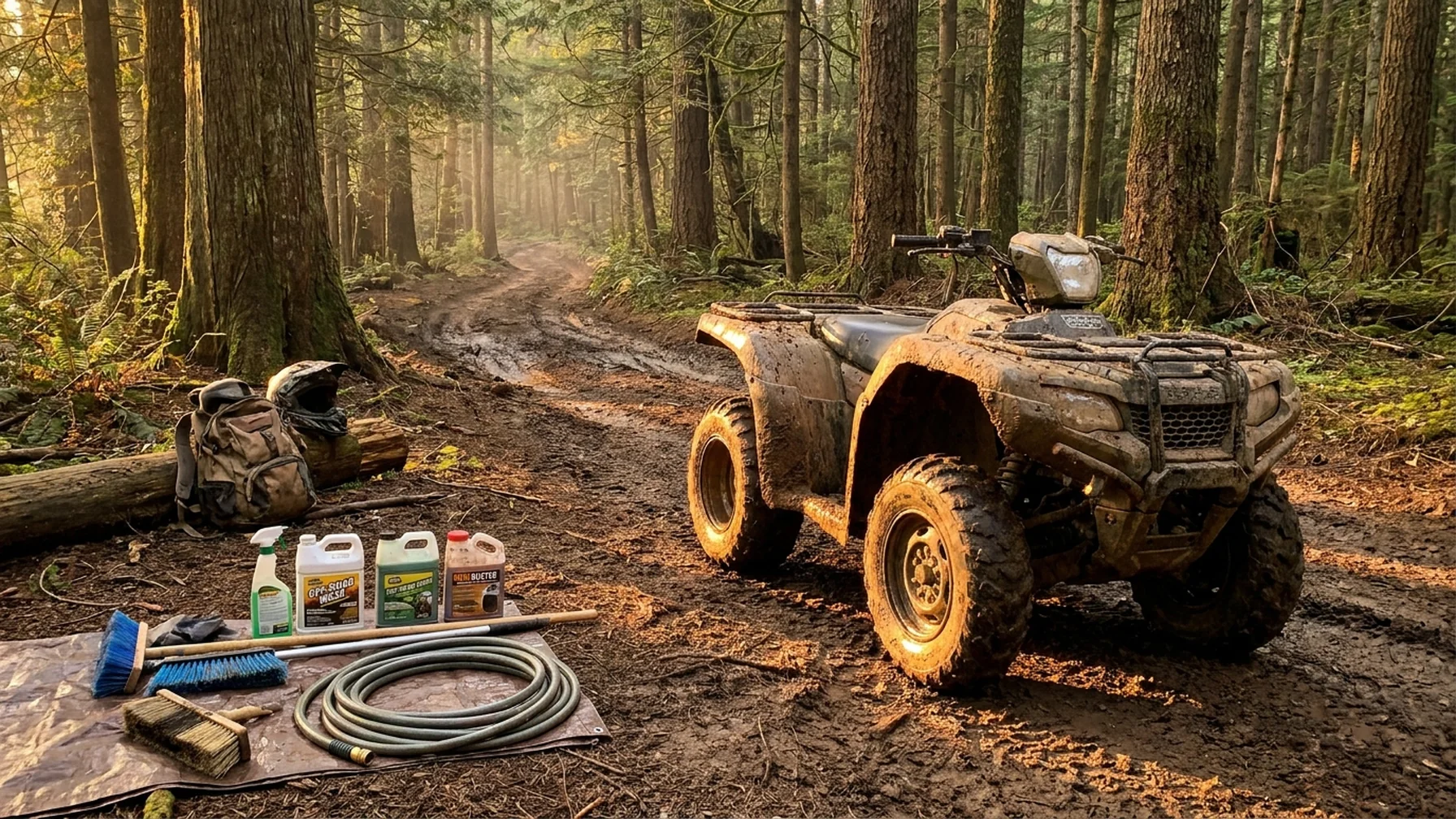
After a day of mud riding, cleaning your ATV is crucial to maintaining its performance. Here's how to do it effectively:
- Rinse off mud and debris using a garden hose or pressure washer.
- Clean the undercarriage thoroughly to prevent rusting.
- Inspect and lubricate moving parts to prevent wear.
- Check for any damage or parts that need repair.
Regular cleaning and maintenance extend the life of your ATV and ensure it remains ready for your next adventure. Keeping the vehicle in top condition is an essential part of responsible ATV ownership.
ATV Safety Tips for Beginners
New to ATV mud trails? These safety tips will help you ride confidently:
- Start Slow: Familiarize yourself with the ATV's handling on easier trails before tackling challenging mud paths.
- Ride with a Buddy: Having a partner enhances safety and can assist if you encounter trouble.
- Stay on Marked Trails: Avoid environmental damage and potential hazards by sticking to designated paths.
Safety on the trails not only protects you but also ensures the preservation of the environment for future riders. Responsible riding is a key component of the off-road experience.